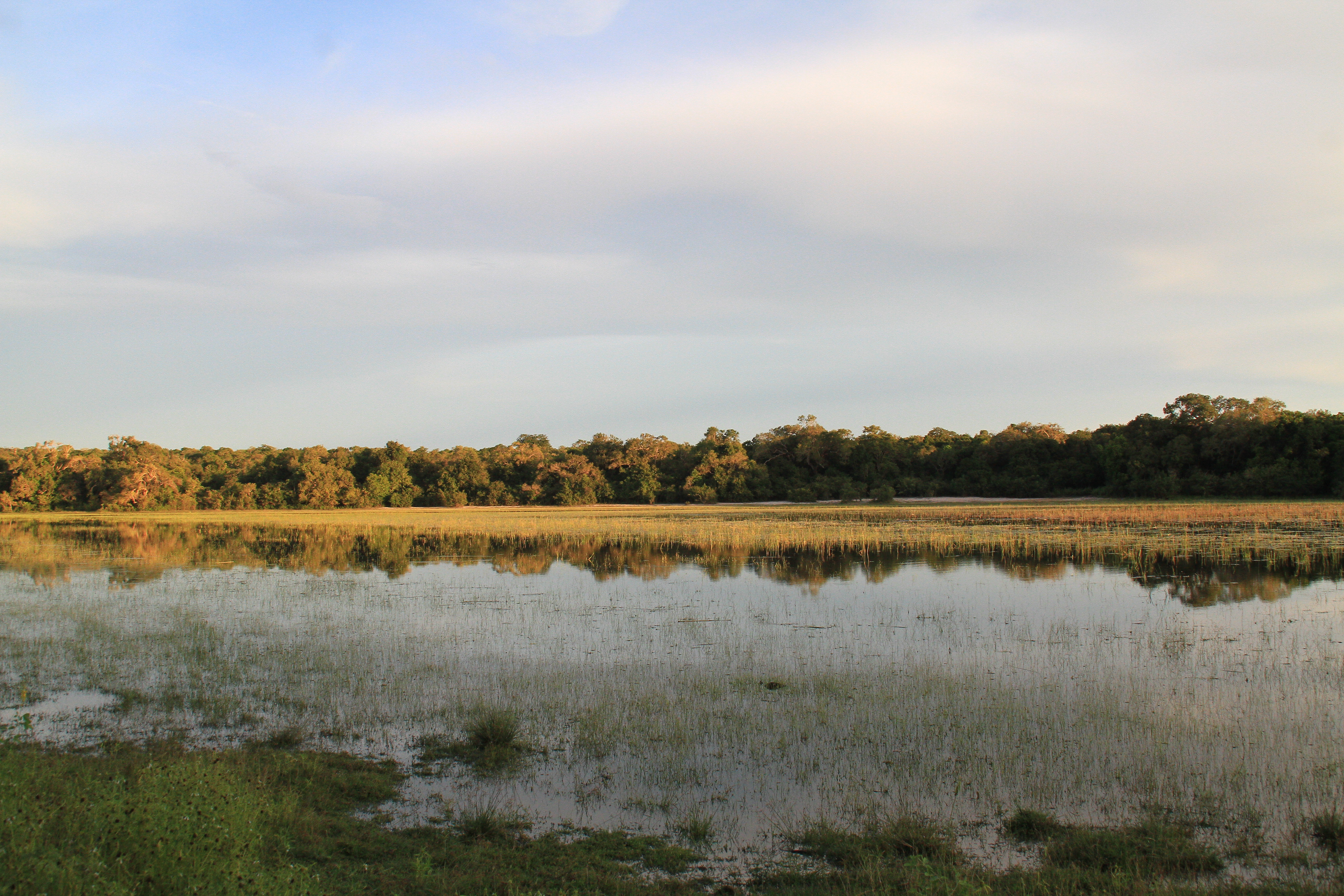
Wilpattu is the largest national park in Sri Lanka — a thousand square kilometres of dry-evergreen forest, scrub jungle, and the natural sand-rimmed lakes (willus) that give the place its name.
The park sits where the dry zone meets the western coast, an hour north of Anuradhapura. Closed for most of the country's civil war, it reopened in 2010 to a forest that had been left almost entirely to itself for two decades. The result is a denser, older feel than you'll find further south — more leopards in cover, more sloth bears at dusk, and a noticeable absence of the jeep convoys that mark Sri Lanka's busier parks.
The park is open year-round, but each season offers its own quiet. We've sketched the rhythm below.
Wildlife sightings depend less on the weather than on the willus. Here's how the year reads.
The willus shrink, animals concentrate at the few that remain, and leopards — territorial and visible — are at their most reliable.
Cubs are out, the forest is still green, the heat is dry. Fewer guests than in summer, and our personal favourite weeks.
Brief afternoon showers wake the forest. Tracks are easy to read in damp earth. Bring a layer.
There will be instances where limited access of roads inside the park is available due to bad weather conditions.
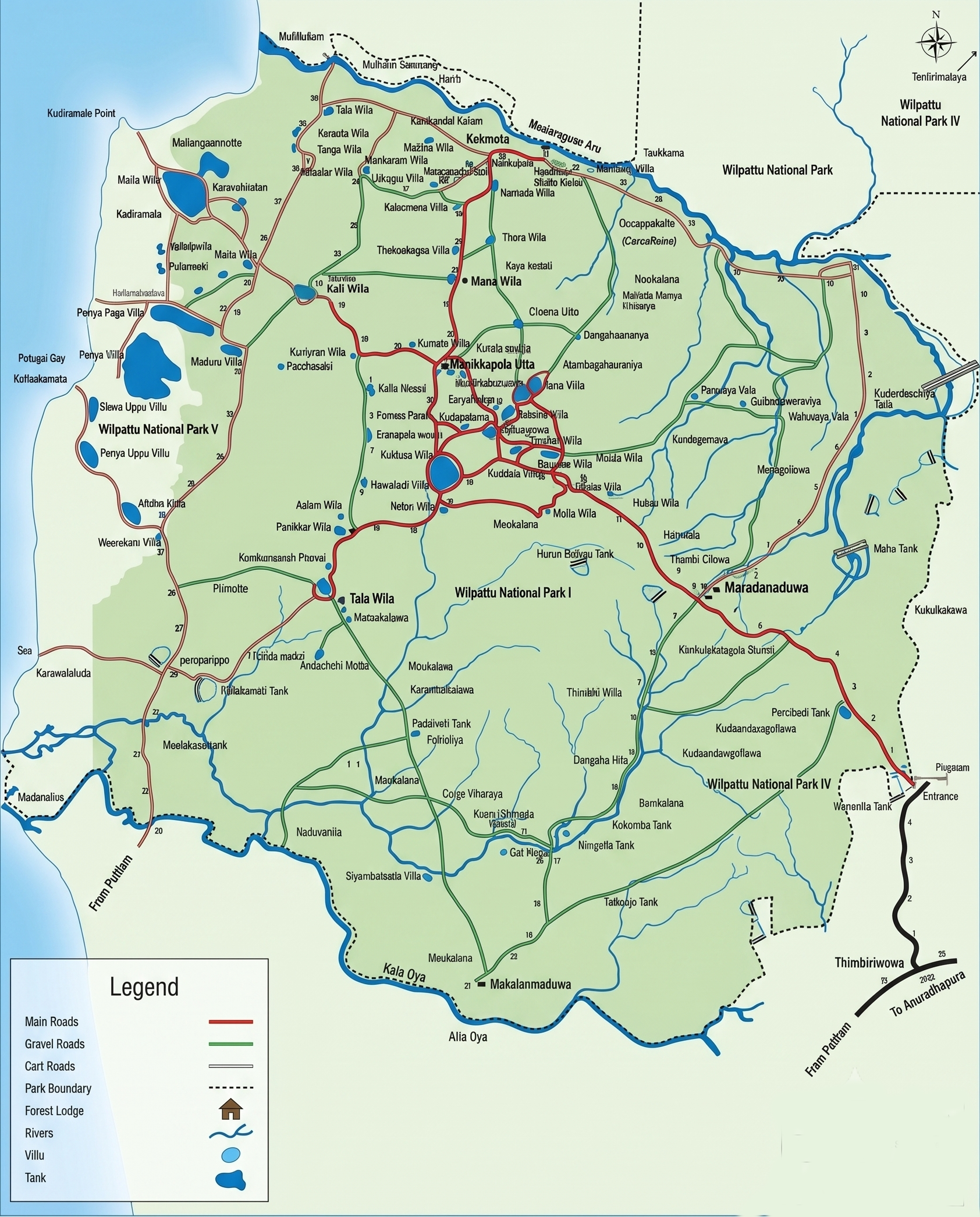 Sketch · Not to scale
The park requires it; the wildlife appreciates it. Standing silhouettes spook even the calmest sloth bear, and a startled animal is one nobody else gets to see.
We cut the engine the moment we stop. Whisper. Point. The leopard isn't going anywhere if we don't move first.
Take photos, take notes, take it in.
Not a leaf, not a feather, not a wrapper. Pack it out. Wilpattu is the same wilderness we found seventeen years ago — let's keep it that way.
If we say we're moving on from a sighting, it's because someone — animal or guest behind us — needs that space. Patience is the safari.
Honestly — most of the time, yes. Our guests' sighting rate over the last three peak seasons is around 86%. We promise effort, attention, and a guide who'd genuinely rather not see a leopard than rush one. We don't promise the animal itself, because nobody honest can.
We leave at 05:30 A.M for morning safaris
We welcome children aged 6 and up. Younger children are welcome, but the safari itself can be a long, hot, and quiet morning that's tough on smaller travelers.
Camera equipment, Earth-toned clothing (Anything camo is best), a wide-brim hat, sunscreen, a refillable water bottle, and binoculars if you have them.
Email or WhatsApp us — both are answered by an actual person, usually within a day. We hold a date with a 25% deposit and confirm everything else once we know your travel plans.